Quick answer
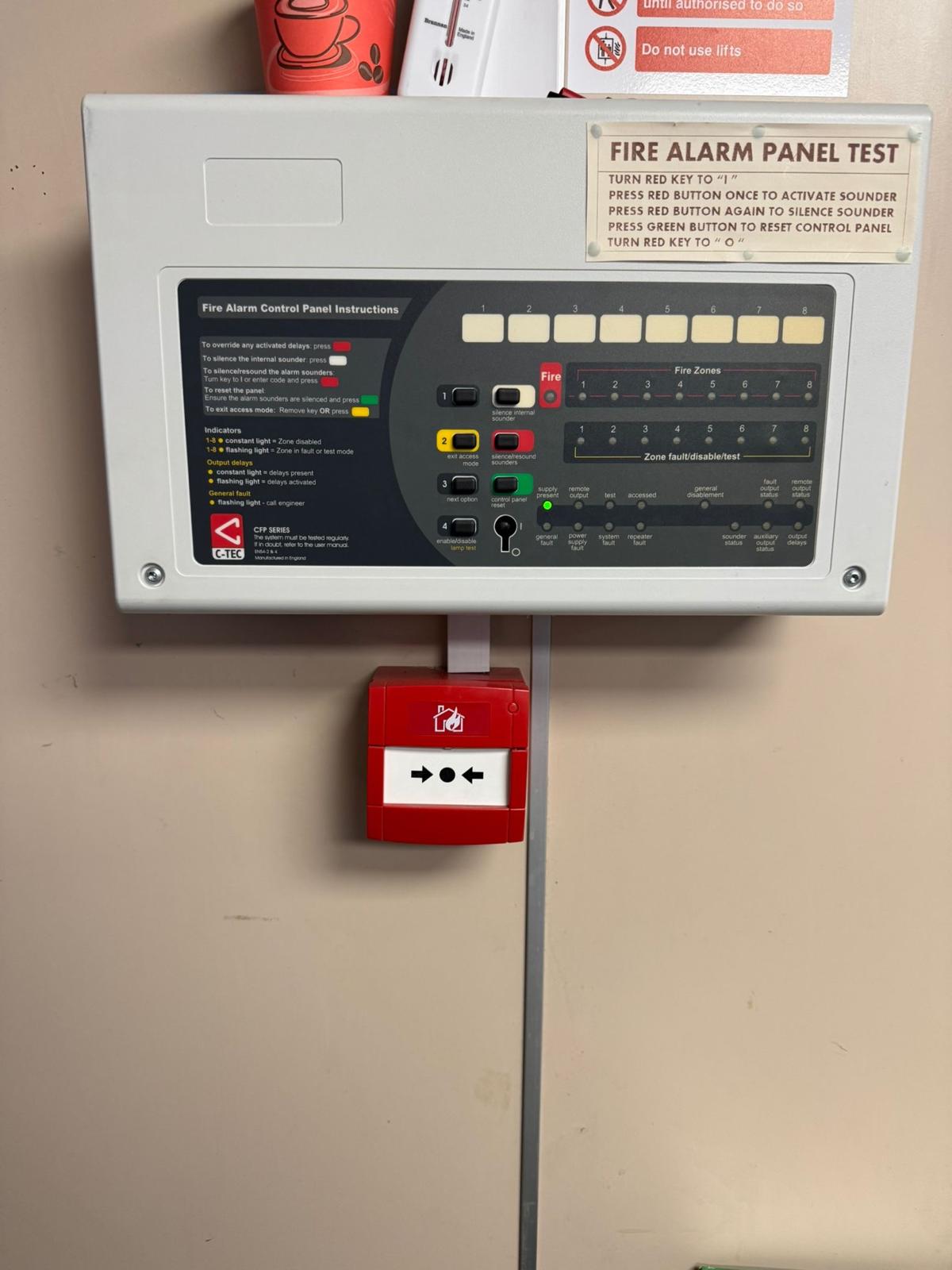
Every rented home in England must have a working smoke alarm on each storey used as living accommodation, and a carbon monoxide alarm in any room with a fixed combustion appliance (except gas cookers). HMOs need more: usually mains-powered, interlinked smoke alarms throughout the escape route and a heat alarm in the kitchen, and larger HMOs need a Grade A fire alarm system with a control panel to BS 5839-6. The exact system depends on the size, layout and fire risk assessment of the property.
If you let a shared house or HMO in Kent, fire safety is the area councils check most closely. This guide explains what the law requires, which fire alarm grade and category suit different types of HMO, and how to keep the system compliant once it’s in.
All rented homes
A smoke alarm on every storey, plus CO alarms by boilers and stoves.
Most HMOs
Mains-powered, interlinked Grade D1 alarms and a kitchen heat alarm.
Larger HMOs
A Grade A panel system to BS 5839-6.
What fire alarms does a rented property need by law?
Under the Smoke and Carbon Monoxide Alarm (Amendment) Regulations 2022, all private landlords in England must:
- Fit at least one smoke alarm on every storey that has a room used wholly or partly as living accommodation.
- Fit a carbon monoxide alarm in any room with a fixed combustion appliance, such as a gas boiler or wood burner (gas cookers are excluded).
- Check the alarms are working on the first day of each new tenancy.
- Repair or replace any faulty alarm as soon as reasonably practicable after a tenant reports it.
These are minimum standards. For HMOs, councils expect a much higher level of fire detection.
What are the fire alarm requirements for an HMO?
HMO landlords have extra duties under the Housing Act 2004 and the Management of Houses in Multiple Occupation (England) Regulations 2006, which require fire alarms and fire precautions to be kept in good working order. Councils assess fire risk using the Housing Health and Safety Rating System, and most base their standards on the LACORS Housing Fire Safety guidance and BS 5839-6, the British Standard for fire detection in domestic premises.
If the HMO has communal areas, the Regulatory Reform (Fire Safety) Order 2005 also applies, and you must have a written fire risk assessment for those areas.

What do fire alarm grades and categories mean?
BS 5839-6 describes a system using two labels:
- The grade describes the type of equipment. Grade A is a full system with a control panel, manual call points and detectors. Grade D1 is mains-powered smoke and heat alarms with a sealed, tamper-proof backup battery, interlinked so that if one sounds they all sound. Grade D2 is the same but with a user-replaceable backup battery. Grade F is battery-only alarms, which are not usually suitable for HMOs.
- The category describes how much of the building is covered. LD3 covers the escape route (hallways and landings). LD2 adds high-risk rooms such as kitchens and living rooms. LD1 covers every room where a fire could start.
Which fire alarm system does my HMO need?
As a starting point, based on the LACORS guidance most Kent councils use:
| Type of property | Typical fire alarm system |
|---|---|
| Shared house, 1 or 2 storeys, let to a group (like a family home) | Grade D1, LD3: interlinked mains smoke alarms in the hall and landing, plus an interlinked heat alarm in the kitchen |
| Shared house, 3 or 4 storeys | Grade D1, LD2: as above, plus detection in the living room and other high-risk rooms |
| Bedsit-style HMO, 1 or 2 storeys | Grade D1, LD2, with a smoke alarm in each let room interlinked with the escape route |
| Bedsit-style HMO, 3 storeys or more, or larger HMOs | Grade A, LD2: a panel-based system with detection in communal areas and each let room |
| Self-contained flats converted from a house (Section 257 HMO) | Depends on the conversion’s fire separation; often Grade A or D1 in communal areas plus alarms in each flat |
This table is a guide, not a substitute for your council’s requirements or a fire risk assessment. Councils can, and do, ask for a higher standard where the layout or occupants make the risk greater.
Does an HMO need a licence?
In England, a mandatory HMO licence is required if the property is occupied by five or more people forming two or more separate households. Some councils also run additional or selective licensing schemes for smaller HMOs or certain areas. Licence conditions almost always include fire alarm standards and proof of servicing, so check with your local council, whether that’s Gravesham, Dartford, Medway, Maidstone or elsewhere in Kent, before you let the property.
How often should HMO fire alarms be tested and serviced?
- Grade D1 or D2 alarms: test them at least monthly by pressing the test button, and replace them at the end of their working life, normally 10 years.
- Grade A systems: test weekly using a call point, keep a logbook and have the system serviced by a competent engineer at least every six months, as set out in BS 5839.
- Emergency lighting in communal areas: test monthly and do a full-duration test once a year. See our guide to emergency lighting testing.
Keep certificates and logbook records. Councils will ask for them when you apply for or renew a licence, and after any complaint.
Frequently asked questions
Can I use battery smoke alarms in an HMO?
Generally no. Councils expect mains-powered, interlinked alarms (Grade D1 or better) in HMOs. Battery-only alarms may meet the basic rules for a single-household let, but they are not usually accepted for HMOs.
Do I need a heat alarm in an HMO kitchen?
Yes, in almost all cases. Smoke alarms cause false alarms in kitchens, so an interlinked heat alarm is used instead. It still triggers every other alarm in the property.
Who is responsible for testing fire alarms in an HMO?
The landlord or managing agent. Tenants can be asked to test alarms in their own rooms, but the legal duty to keep the system working, serviced and recorded stays with the landlord.
What happens if my HMO fire alarm isn’t compliant?
The council can refuse or revoke a licence, serve an improvement notice, issue a civil penalty of up to £30,000 or prosecute. More importantly, a poor system puts tenants’ lives at risk.
Do I need a fire risk assessment for an HMO?
Yes, if the property has communal areas, under the Fire Safety Order. Even where it isn’t strictly required, councils expect landlords to understand and manage fire risk, and the assessment is what justifies your choice of fire alarm system.
HMO fire alarms installed across Kent
Watchman Fire & Security designs, installs and services fire alarm systems to BS 5839 for landlords, letting agents and HMO owners across Kent. We’ll survey the property, recommend the grade and category your council is likely to require, fit the system with minimal disruption to tenants and keep it serviced with full certification. For more background, read BS 5839 explained and 5 fire alarm myths, or request a free quote.


