Fire safety is one of those areas where a little misplaced confidence can be genuinely costly — not just in terms of risk to life, but financially and legally too. Businesses found in breach of the Regulatory Reform (Fire Safety) Order 2005 can face unlimited fines and, in serious cases, imprisonment. Here are five common misconceptions we still hear regularly, and what’s actually true.
Myth 1: “We’re a small business, so the rules don’t really apply to us”
Almost every non-domestic premises in England and Wales is covered by the Fire Safety Order, regardless of size. A two-person office has the same basic legal duty as a large warehouse: a suitable fire risk assessment and appropriate fire detection and warning arrangements. The scale of what’s “appropriate” changes with the size and risk of the building, but the underlying duty doesn’t disappear just because you’re small.
Myth 2: “Our smoke alarms are enough — we don’t need a proper fire alarm system”
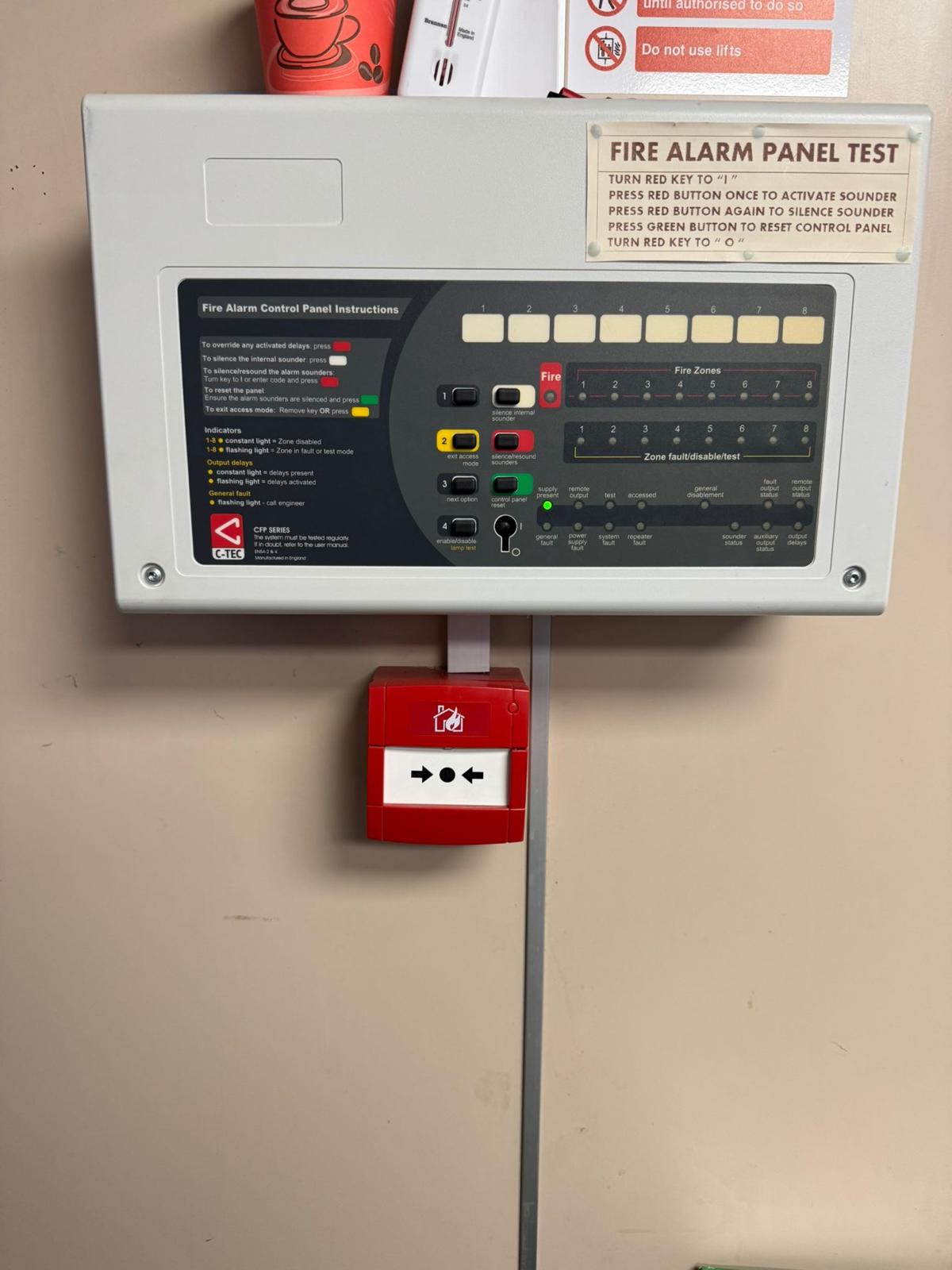
Domestic-style smoke alarms bought from a hardware shop are not a substitute for a system designed and installed to BS 5839, the British Standard for fire detection in non-domestic buildings. What’s “appropriate” depends on your building’s layout, use, and occupancy — a shop, an office, and a warehouse each have different requirements. A fire risk assessment (ideally carried out by a competent professional) is the only reliable way to know what your specific premises actually needs.
Myth 3: “We had it installed once, so we’re covered”
This is one of the most common — and most costly — misunderstandings. A fire alarm system that was compliant on installation day but hasn’t been tested or serviced since is not a compliant system. BS 5839 sets out expectations for weekly in-house testing and at least six-monthly professional servicing, with records kept in a logbook. In real prosecutions, missing or overdue maintenance records are routinely cited as contributing factors, and enforcing authorities can and do request evidence of ongoing compliance, not just an installation certificate.
Myth 4: “Fines are only for serious cases involving injury”
Prosecutions don’t require an actual fire or injury to happen. Enforcing authorities can act on a fire risk assessment audit alone, and breaches such as inadequate fire detection, missing emergency lighting, or blocked escape routes have led to fines running into tens of thousands of pounds even where no one was hurt. Courts can impose unlimited fines for serious breaches, and individuals — not just the company — can be held personally liable if they’re the “responsible person” for the premises.
Myth 5: “One system fits every building”
Fire alarm requirements aren’t one-size-fits-all. BS 5839 defines several categories of system, from basic manual alarms covering escape routes only, through to full automatic detection covering an entire building. The right category for you depends on things like how the building is used, how many people are on site, how quickly they can evacuate, and any specific fire risks (flammable materials, complex layouts, sleeping accommodation, and so on). Installing a generic, off-the-shelf system without a proper assessment is a common way businesses end up under-protected and non-compliant without realising it.
Getting it right doesn’t have to be complicated
The good news is that none of this requires guesswork on your part. A qualified fire safety professional can carry out your risk assessment, recommend the right system, install it to BS 5839, and set up a servicing schedule that keeps your records — and your compliance — up to date.
Watchman’s engineers are DBS-checked and fully qualified, with over 20 years of experience installing and maintaining fire alarm systems to British Standards. If you’re not sure where your business stands, we’re happy to take a look.
Get in touch for a fire safety assessment, or call 01474 526 653.